TECHNOLOGY
Technology
FB, Sheet Forging,
and the beyond.
Based on Fine Blanking (FB), while expanding our business to metal stamping and Sheet Forging, we deepen our understanding for existing technologies and strive to research and development of new plastic forming methods.
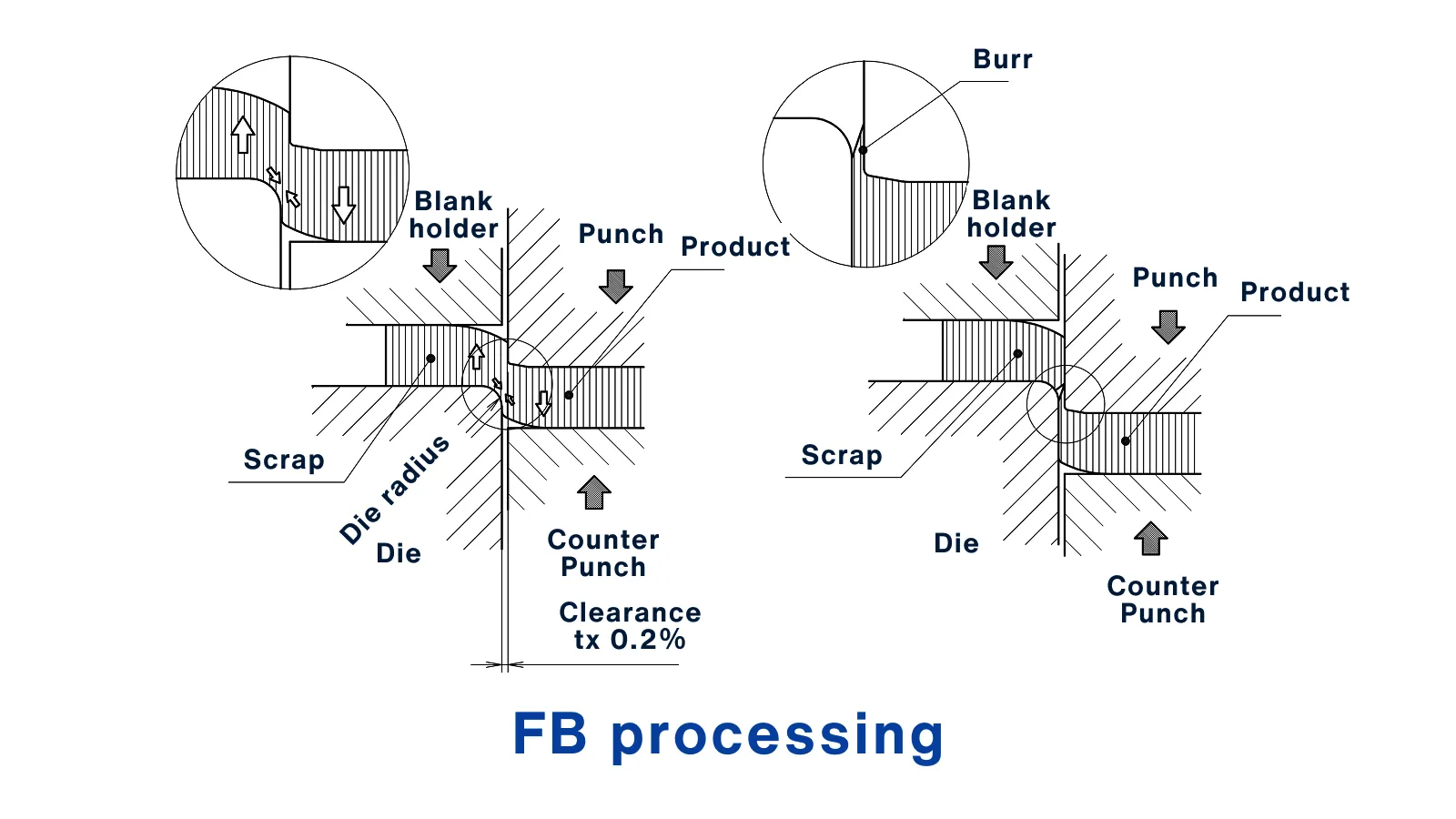
1.Fine Blanking process
2.Feature of FB Products
2.1 Application
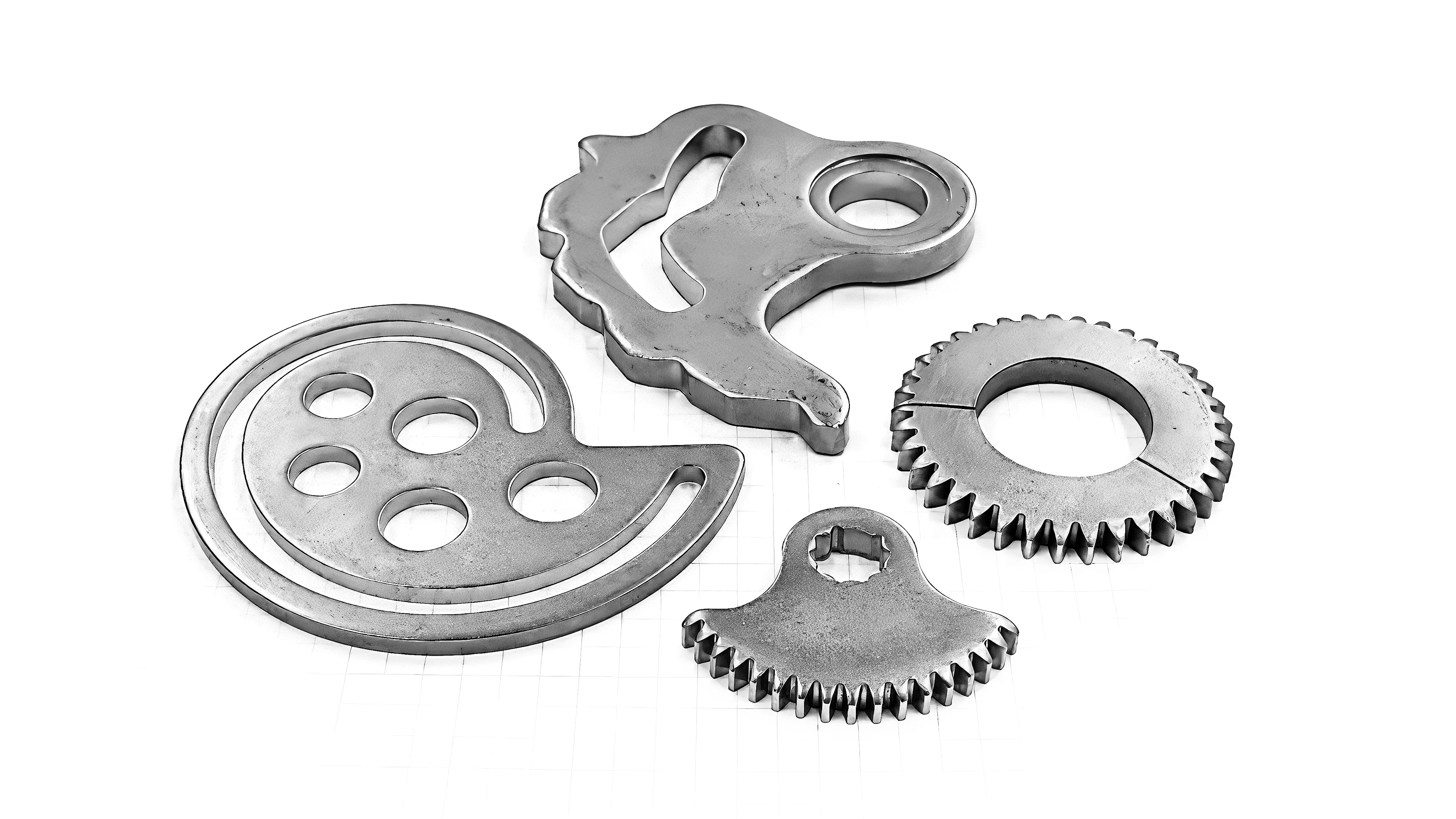
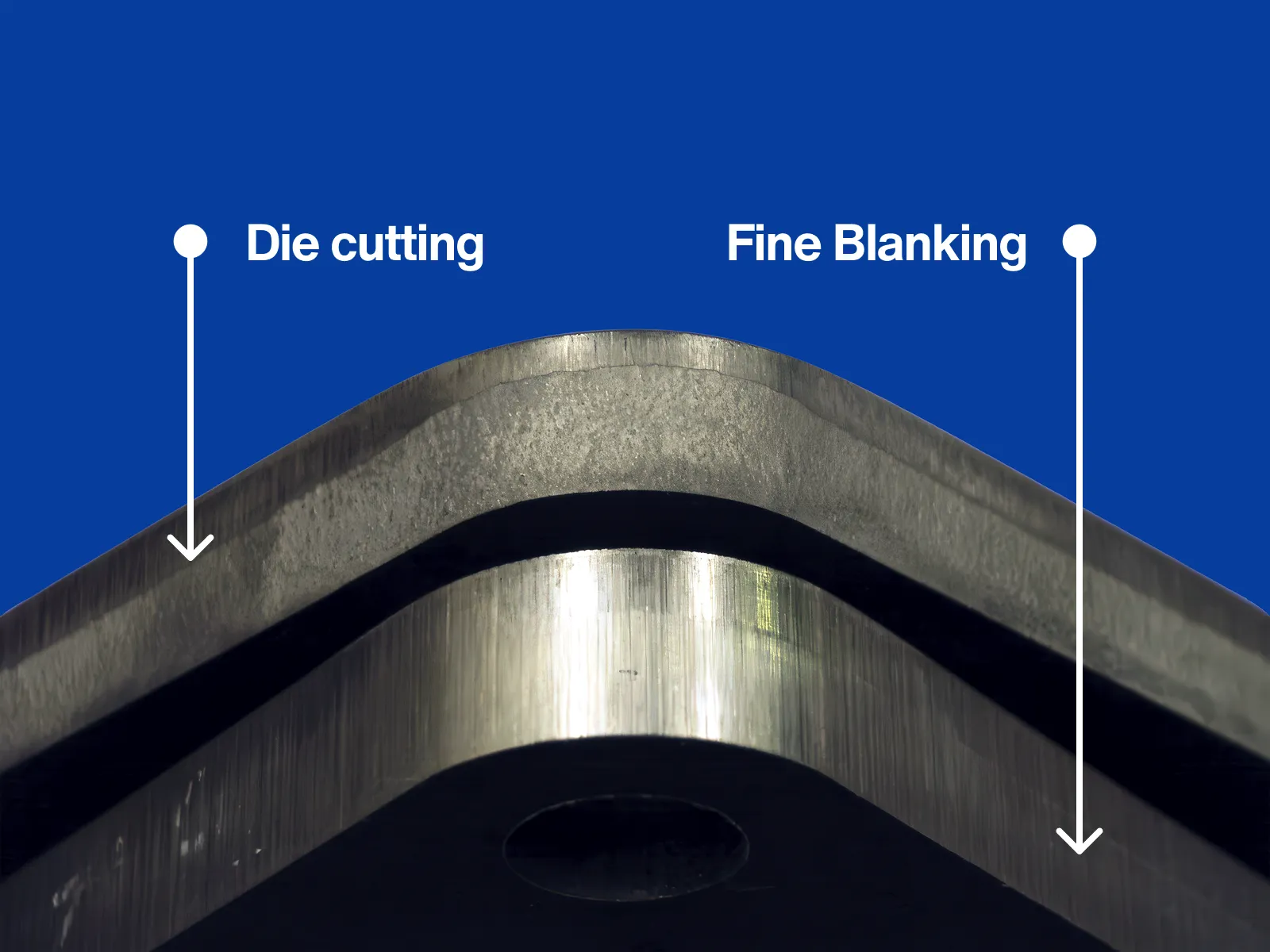
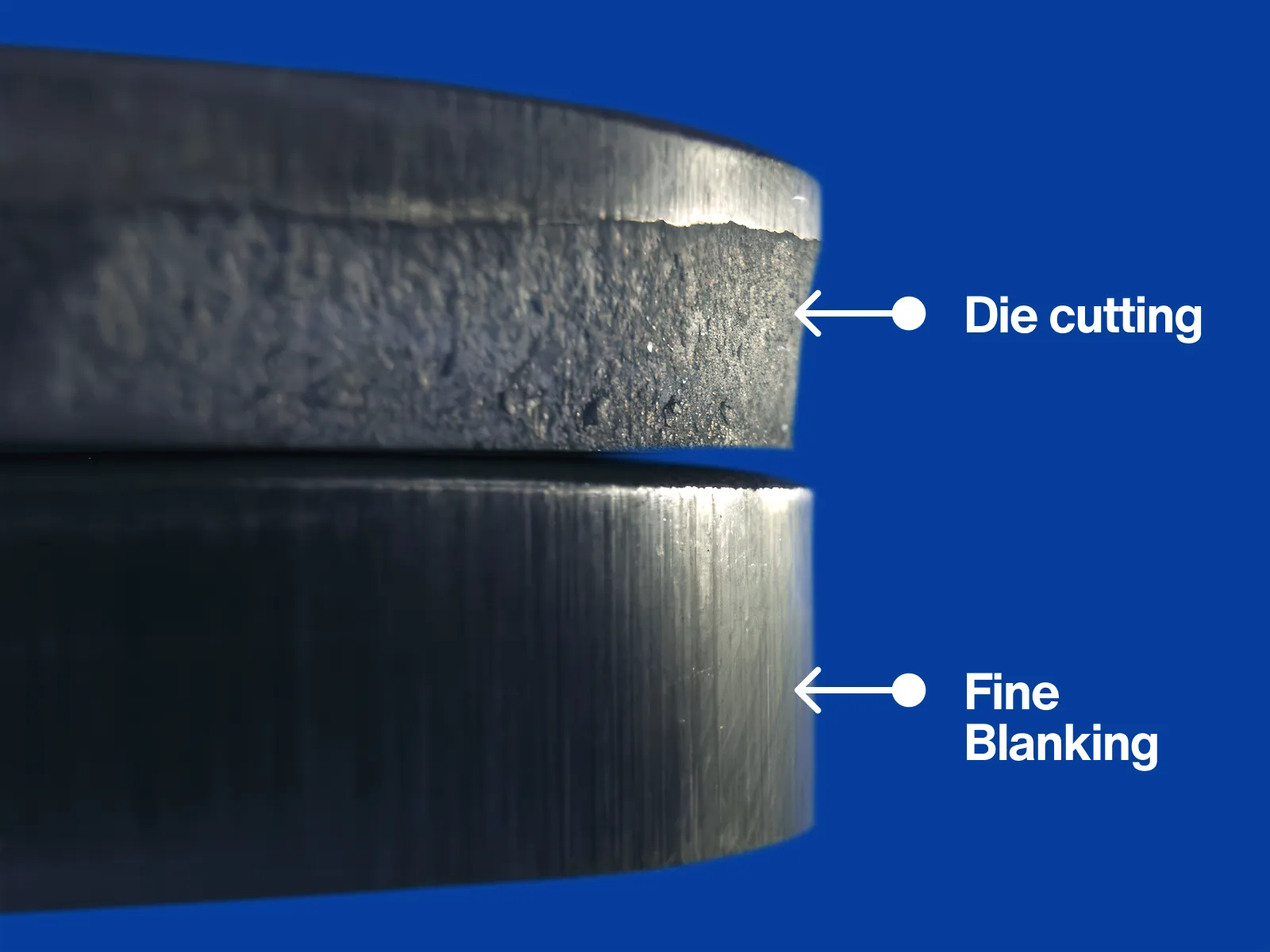
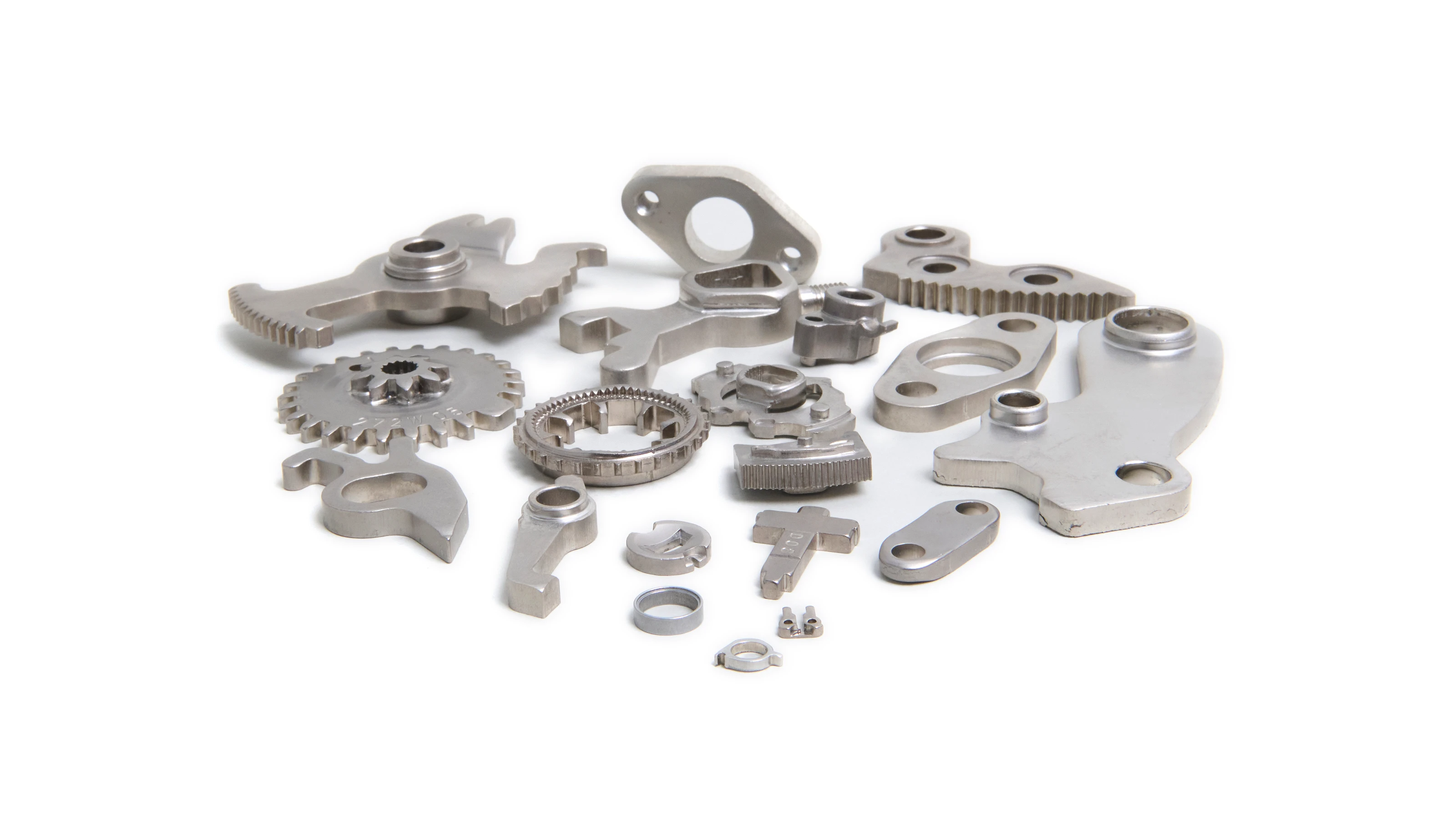
Taking advantage of its smooth cutting surface, for gears/hooks/clicks requiring engagement/interlocking/lapping functions on their side surface.
Taking advantage of its superior flatness, for friction plates including brake pads/clutches/flanges requiring sealing/lapping functions on their flat surface.
Given die processing enables to manufacture parts with about the same machine-hour regardless of the shape of parts, it is effective when parts contain complex shape of holes that tend to be costly with other conventional manufactual methods.
2.2 Quality
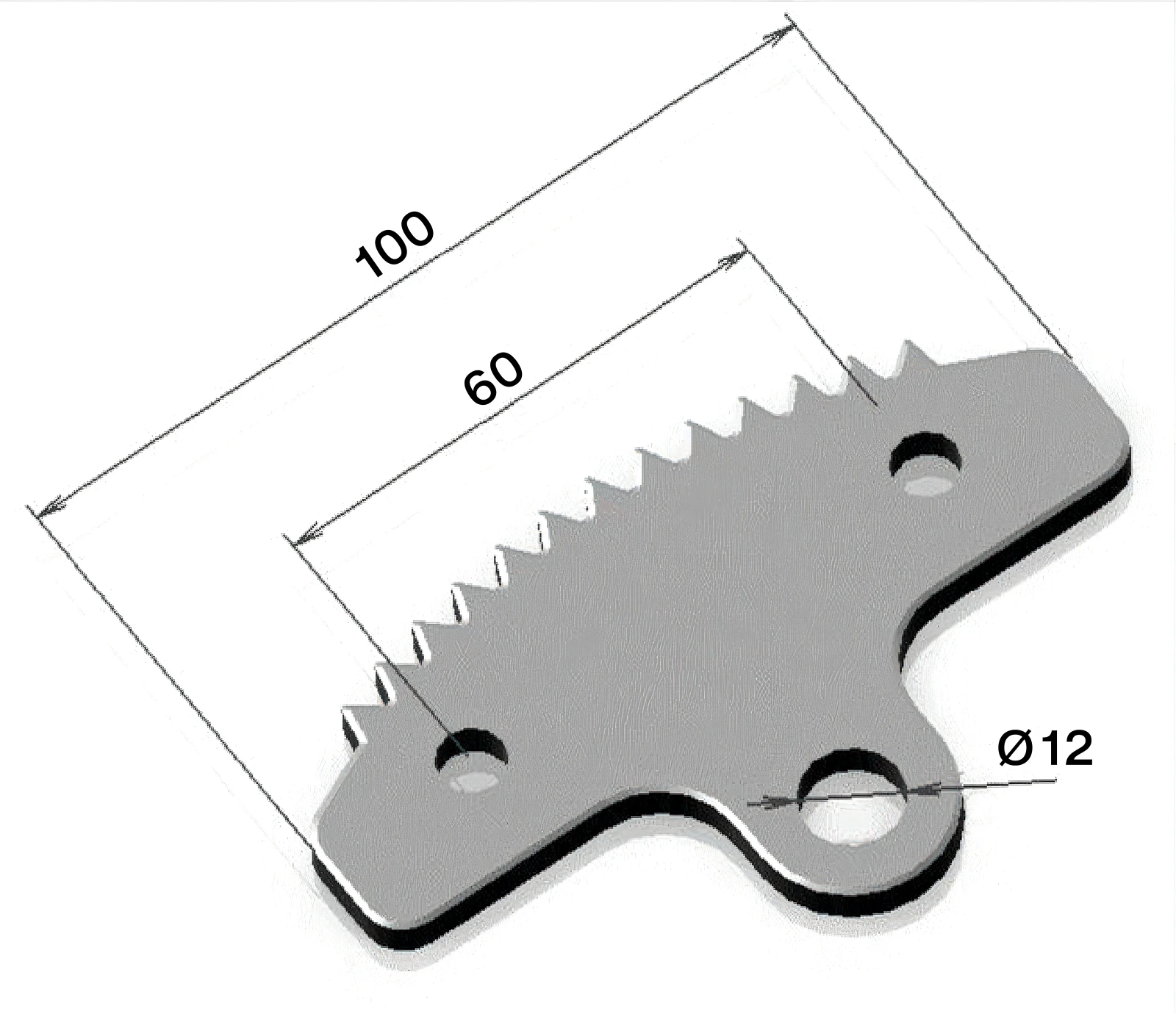
For example, as for common FB parts shown below (with 5mm-thick of special steel such as S45C or SCM435), it is possible to provide FB products with the precision described as follows: profile accuracy ±0.03㎜; bore diameter accuracy ±0.02㎜; hole pitch ±0.02㎜; shear surface roughness less than Ra1.6.
2.3 Productivity
Fine Blanking is the metal stamping method that enables to produce one piece of parts in 1 - 5 seconds in general, when using continuous stamping with coils, or in 5 -15 seconds when processed by sheet materials or sketch blanks. Also, because of requiring a die, FB is the method to manufacture the same products for a long period of time with little change in shape. Therefore, a single machine of Fine Blanking can produce 200 - approx. 500,000 pieces of parts per month.
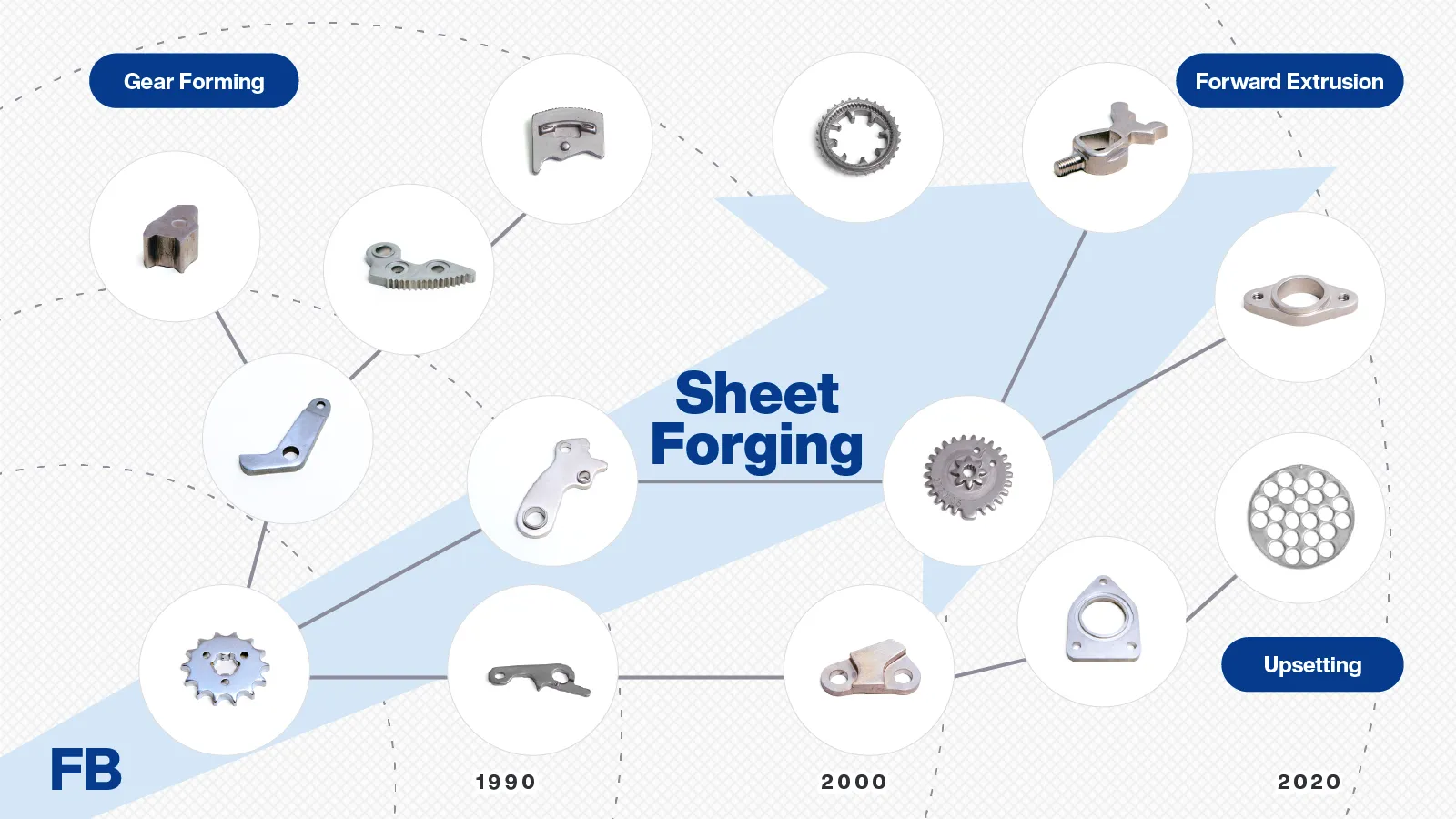
3.Sheet Forging
4.Proposal for Changeover of Processing Method
4.1 Metal Processing Method
The process of forming metal into functional shape is largely divided into 4 methods. Method 1 is called machining or removal processing, cutting/shaving a block of metal little by little with machine tool into a desirable shape. Method 2 is called casting, pouring molten metal into a mold. Method 3 is welding, joining pieces of metal sheet/stick/pipe together by melting their edges while heating, adding filler material and pressing them together. Welding also includes brazing (pouring different molten metal into joint part), diffusion bonding (pressing pieces of metal under high-temperature/high-pressure to trigger interatomic bond), and so on. Method 4 is plastic forming, shaping metal into an intended shape by an external force. This method features that the loss of material can be limited, the material strength can be maintained/enhanced, so it is suitable for mass production. As a side note, these 4 methods are often combined for forming metal. For example, processing raw material by plastic forming into rough shape, followed by machining to finish.
4.2 Processing Method Changeover by Fine Blanking/Sheet Forging
For some materials processed by other methods, FB or Sheet Forging can bring various benefits including cost-saving, functional improvement, and lead-time reduction.
4.2.1 Laser Machining/Wire EDM (Electric Discharge Machining)→FB
Replacing laser machining or wire EDM with FB can significantly reduce machining cost although it requires initial costs for a mold. FB also has another benefit of the easier post processing, because work hardening by press cutting causes less residual strain at the cut end than thermal influence by laser machining.
4.2.2 Casting→FB/Sheet Forging
For manufacturing parts shaped in sheet or sheet with steps, this method can reduce energy (CO2 emission) because it doesn't require to melt metal. In addition, FB/Sheet Forging requires no/limited grinding for finish because of a smooth rolled surface, while casting often requires additional machining to finish the surface of manufactured parts.
4.2.3 Hot Forging + Machining→FB/Sheet Forging
For sheet type products with approx. Φ100mm and approx. 10mm thickness, hot forging needs processing at least twice. This brings issues such as increase in processing energy and stock in process caused by multiple processes. By replacing with FB/Sheet Forging, you can significantly reduce energy (CO2 emission) and stock in process, because you can produce parts in intended shape from coil material only through continuous process and easy deburring.
4.2.4 Powder Metallurgy→FB/Sheet Forging
Powder metallurgy products can be manufactured in complex shape with a certain level of strength, but would occasionally have problems in impact/wear resistance. Even for such cases, FB/Sheet Forging can improve impact/wear resistance by forming rolled sheet metal.
5.And the beyond - Research & Development
In order to realize a sustainable society, manufacturing with energy/resource saving is requested. Then we face a number of challenges such as elimination of post processing, process reduction, and material usage enhancement through increasing precision. In addition, big challenges for us also include extension of die life, processing high-strength materials contributing to light weight components.
Hatano Seimitsu conducts research & development on these challenges through collaborative effort with professors in societies for technology of plasticity, universities, public research institutions.
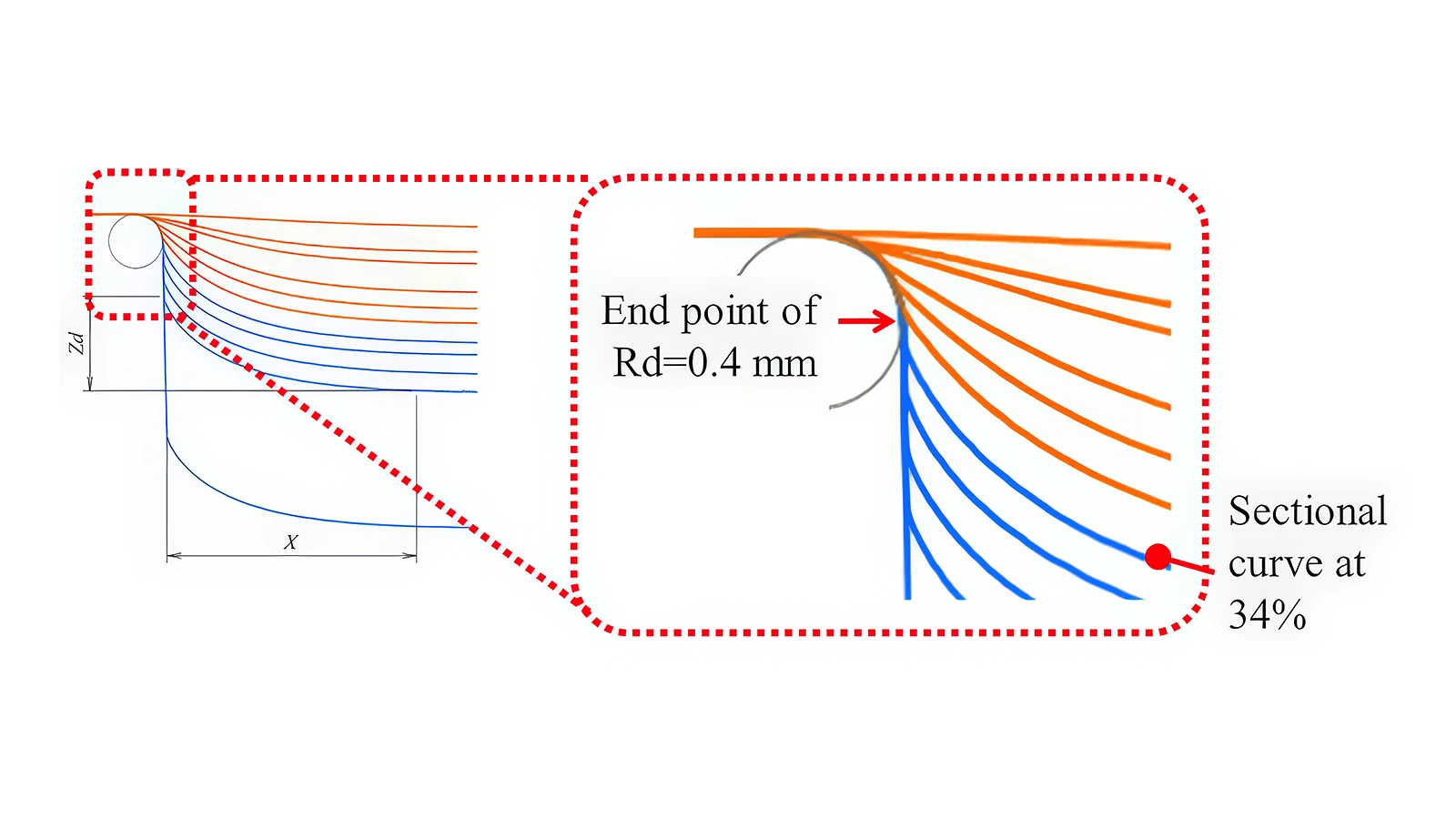
Prediction of die-roll in Fine Blanking
[Paper]Die-roll Generation Factor on Fine Blanking of Copper
Prediction of die-roll in fine blanking by use of profile parameters
6conference presentations
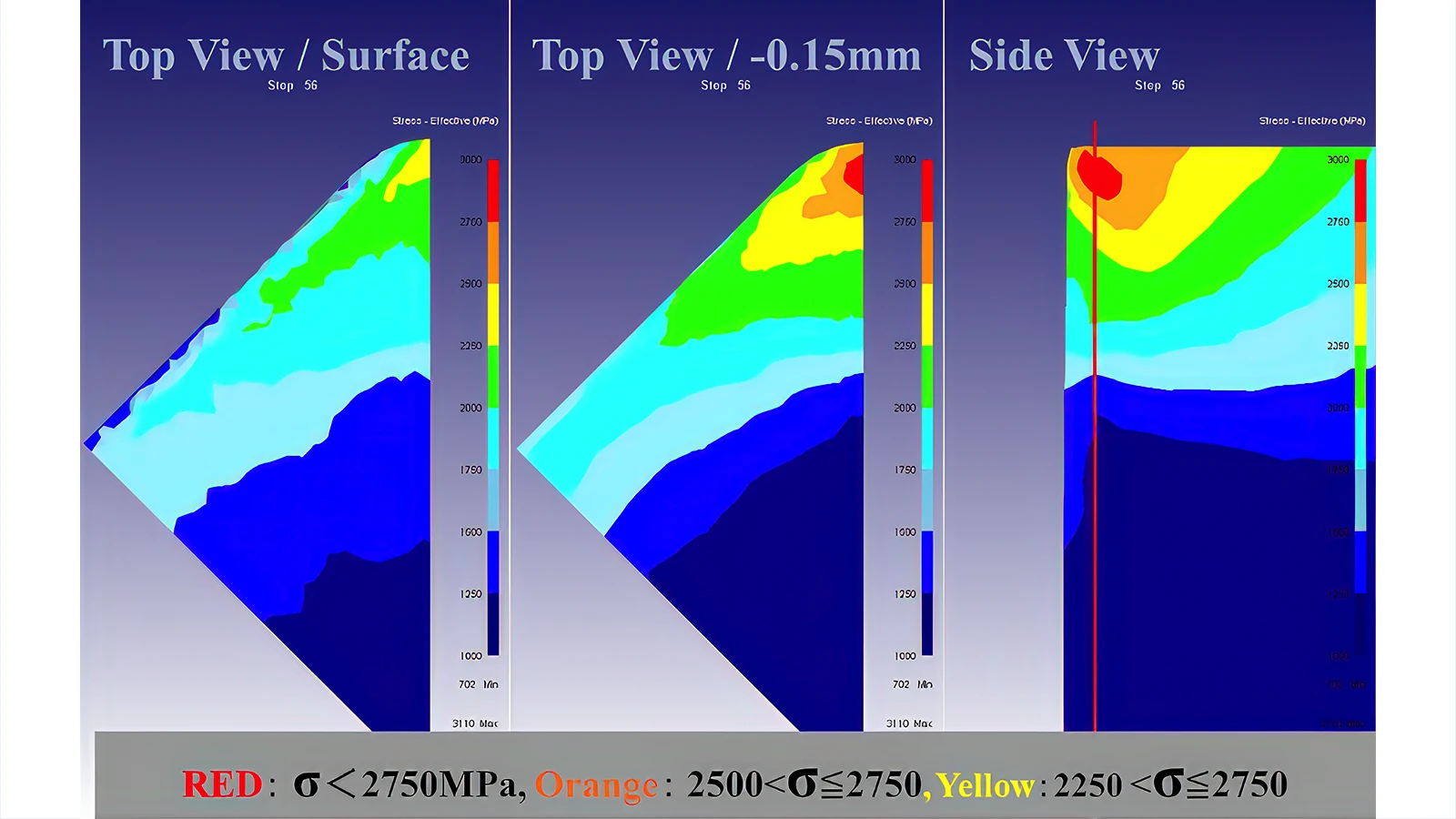
Research on Stress Distribution at the Punch Cutting Edge
6conference presentations
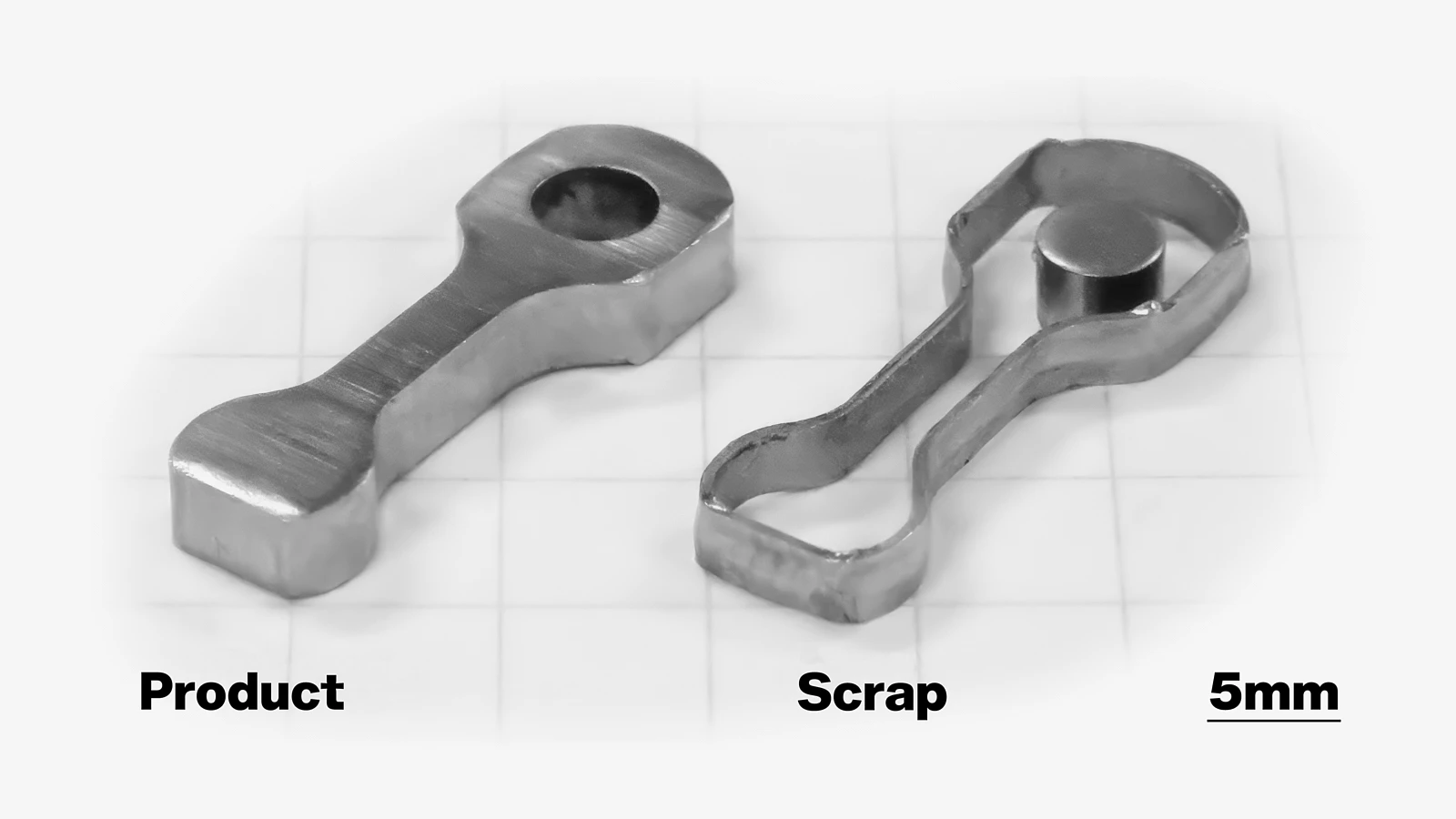
Material usage enhancement
[Paper]Development of High-Material-Usage Manufacturing Process for Precision Components by Lateral Forming with Tablet-Shaped Blank Material
1conference presentation
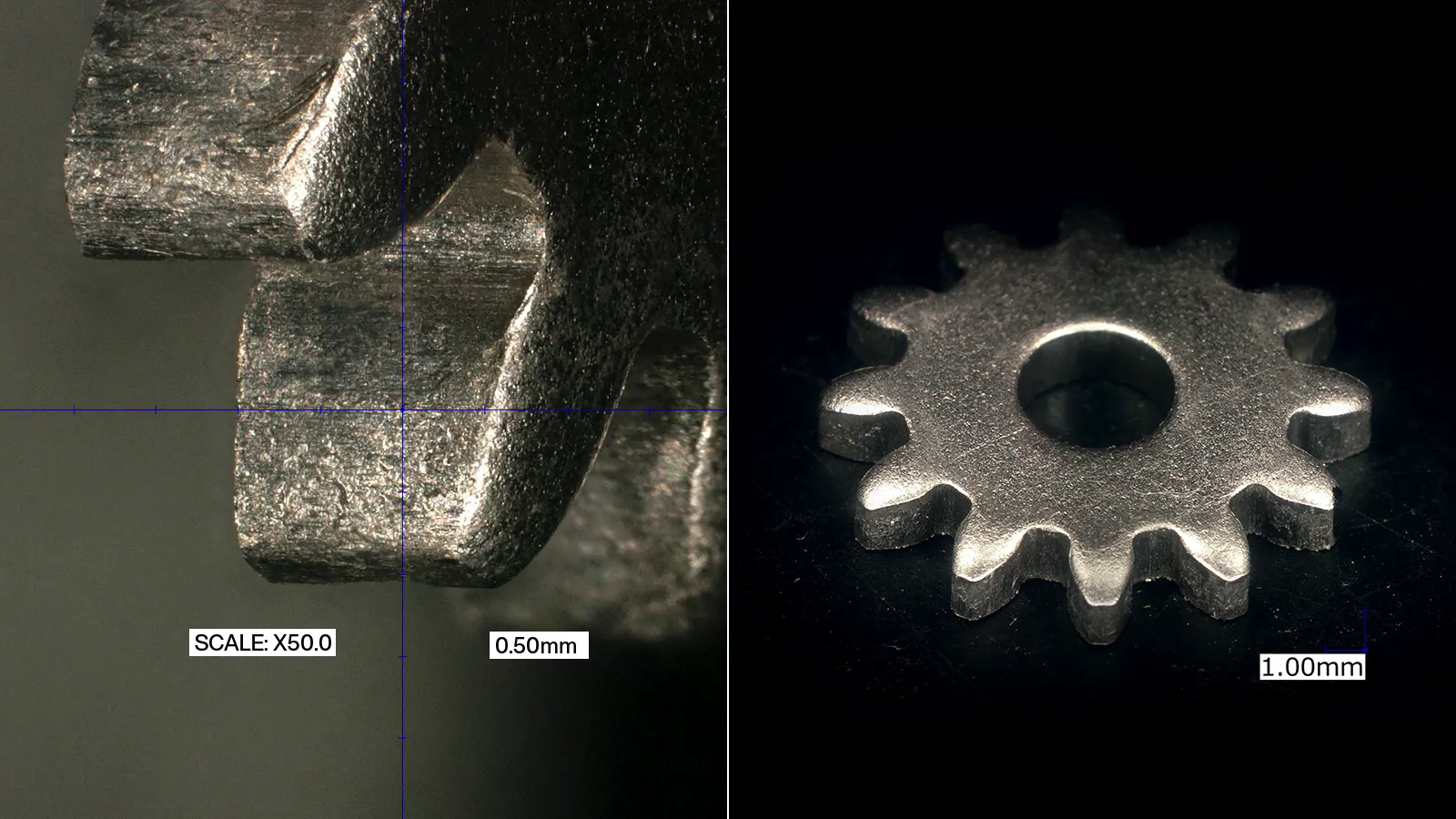
Fine Blanking process for titanium
[Paper]Galling-Free Forming of Titanium and Titanium Alloys Using Carbon Supersaturated Tool Steel Dies
1conference presentation
CONTACT
Contact us
